
Picture this: A visitor arrives at your hospital. They circle the parking lot three times, can’t find a spot, block the entrance for two minutes, and finally park in a restricted zone. The security guard is overwhelmed. The ticketing counter has a queue. And somewhere inside, a patient is waiting.
This is not just inconvenient — it is a daily operational failure that costs businesses time, money, and reputation.
Now picture the same scenario with a smart parking management system in place. The visitor is guided to an available slot in seconds. Entry is automatic. Payment is cashless. The entire process takes under 30 seconds.
That is the power of a parking management system — and in this guide, Raise Solutions explains everything you need to know about it: what it is, how it works, what it includes, and why your facility needs one today.
What Is a Parking Management System?
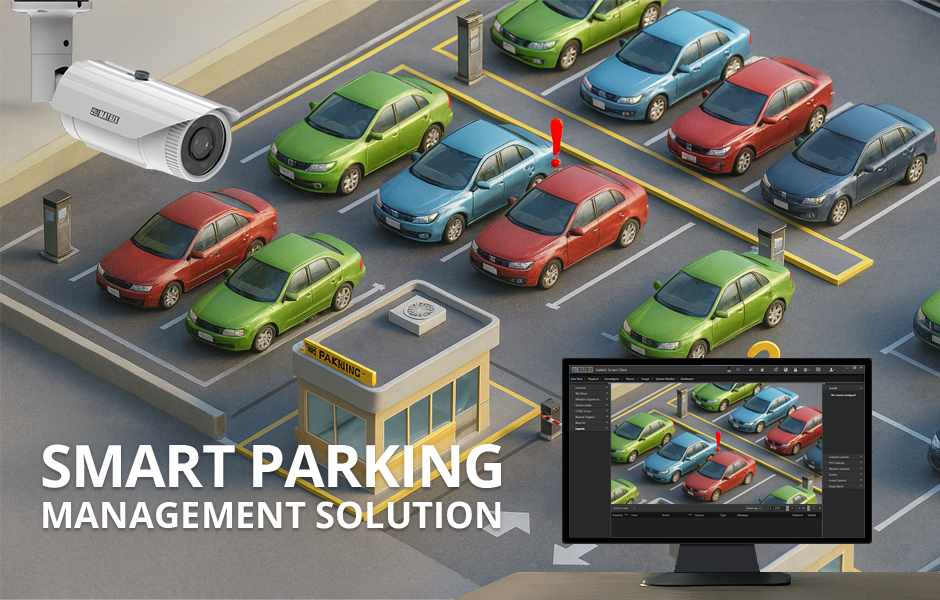
A parking management system (PMS) is an integrated technology solution that automates, monitors, and manages vehicle entry, exit, slot allocation, payment collection, and reporting for a parking facility.
In simple terms, it replaces the manual, error-prone process of managing a parking lot — security guards with registers, paper tickets, and cash counters — with a fully automated, data-driven system that operates 24/7 with minimal human intervention.
A modern parking management system is not just a boom barrier at the gate. It is an entire ecosystem of hardware and software working together — from the moment a vehicle approaches the entry point to the moment it exits and the payment is processed.
Why Is a Parking Management System Important?
Before diving into how it works, it is worth understanding why businesses across India are rapidly adopting parking management systems.
Revenue leakage is a real problem. Manual parking operations are riddled with opportunities for cash mismanagement, free passes to unauthorised vehicles, and unaccounted entries. A PMS records every transaction digitally, eliminating leakage.
Congestion costs you, customers. Parking congestion directly impacts footfall in malls, hospitals, and corporate campuses. A PMS optimises space usage and reduces wait times.
Data drives better decisions. A PMS generates real-time reports on occupancy, peak hours, revenue, and vehicle turnaround — helping management make informed operational decisions.
Security is non-negotiable. Knowing which vehicles are on your premises, at what time, and for how long is a critical security requirement for any modern facility.
Key Components of a Parking Management System
A parking management system is made up of several hardware and software components working in sync. Here is a breakdown of each:
1. Entry and Exit Terminals
These are the physical kiosks or panels installed at the entry and exit points of the parking facility. They house the ticket dispenser, card reader, intercom, and display screen. When a vehicle arrives, the terminal initiates the entry process — issuing a ticket, reading an RFID card, or capturing the number plate.
2. Boom Barriers
Boom barriers are the automated arms that physically control vehicle movement. They rise to allow entry or exit only after the system validates the vehicle’s credentials — whether that is a ticket, RFID card, FASTag, or number plate recognition. Raise Solutions is an authorised dealer of ZKTeco, ESSL, and Autozone boom barriers, which integrate seamlessly with parking management software.
3. RFID Readers and Cards
Radio Frequency Identification (RFID) technology allows registered vehicles — such as monthly pass holders, employees, or residents — to enter and exit without stopping to collect a ticket. The RFID reader at the gate detects the card or tag inside the vehicle and automatically raises the barrier. It is fast, contactless, and completely hands-free.
4. ANPR Cameras (Automatic Number Plate Recognition)
ANPR cameras capture the number plate of every vehicle entering and exiting the facility. The system cross-references this with its database to identify registered vehicles, flag unauthorised entries, and calculate parking duration without any manual input. This is especially useful for cashless, ticketless parking setups.
5. Parking Guidance System (Slot Sensors and LED Indicators)
In large multi-level parking facilities, finding an available slot can itself be a challenge. Slot sensors installed above each parking bay detect whether the spot is occupied or vacant. LED indicators — green for vacant, red for occupied — guide drivers directly to available spots, reducing internal congestion and frustration.
6. Payment Kiosks and POS Systems
Payment kiosks allow drivers to pay for their parking before returning to their vehicle. They accept cash, cards, UPI, and mobile wallets. In fully automated setups, payment can be triggered automatically via FASTag or linked RFID accounts — making the exit truly cashless and queue-free.
7. Centralised Management Software
This is the brain of the entire system. The parking management software runs on a server or the cloud and connects all hardware components. It manages vehicle data, slot availability, payment records, user accounts, reports, and alerts — all from a single dashboard. Operators can monitor the entire facility in real time from any device.
8. Display Boards
Large LED display boards at the facility entrance show the number of available parking slots in real time. This helps drivers make an informed decision before entering and reduces unnecessary congestion at the gate.
9. CCTV and Surveillance Integration
A parking management system is typically integrated with CCTV cameras for 24/7 surveillance of the facility. Any suspicious activity, unauthorised vehicle, or security breach is flagged immediately and recorded for review.
10. Intercom and Help Point
Entry and exit terminals are equipped with intercoms that allow drivers to communicate directly with the parking operator or security team in case of a technical issue, lost ticket, or emergency.
How Does a Parking Management System Work? (Step by Step)
Now that you know the components, here is how the entire system works from entry to exit:
Step 1: Vehicle Arrives at the Entry Point
The driver pulls up to the entry terminal. The ANPR camera captures the vehicle’s number plate and the system checks it against the database.
- If it is a registered vehicle (employee, resident, monthly pass holder) with an RFID tag — the barrier opens automatically. No stopping required.
- If it is a guest or unregistered vehicle — the terminal issues a printed ticket or sends a digital token with a unique barcode or QR code.
Step 2: Boom Barrier Opens
Once the entry is validated — via RFID, ticket issuance, or number plate recognition — the boom barrier rises and the vehicle enters. The system logs the entry timestamp, vehicle number, and ticket/session ID in real time.
Step 3: Driver Is Guided to an Available Slot
In facilities with parking guidance systems, the LED indicators and directional signs guide the driver to the nearest available parking bay. In simpler setups, the display board at the entrance shows overall availability by zone or floor.
Step 4: Vehicle Parks and Timer Runs
The system tracks the parking duration from the moment of entry. The slot sensor marks the bay as occupied, updating the real-time availability count across the facility.
Step 5: Driver Makes Payment
Before returning to the vehicle, the driver visits a payment kiosk, scans the ticket barcode or QR code, and pays the applicable charges. The system calculates the fee based on duration and applicable tariff (hourly, flat rate, or subscription). Payment can be made via cash, card, UPI, or mobile wallet.
For RFID-registered vehicles with linked accounts, the fee is automatically deducted — no payment kiosk visit needed.
Step 6: Vehicle Exits
At the exit terminal, the driver presents the validated ticket, scans the QR code, or the ANPR camera reads the number plate and confirms payment. The boom barrier rises and the vehicle exits. The session is closed in the system and the slot is marked as vacant.
Step 7: Data Is Recorded, and Reports Are Generated
Every transaction is logged in the centralised management software. Operators can access real-time dashboards and generate reports on daily revenue, vehicle count, peak hours, average parking duration, and more — from a desktop or mobile device.
Types of Parking Management Systems
Not every parking facility has the same needs. Here are the main types of parking management systems available:
Ticket-Based System: The most common type. A ticket is issued at entry and validated at payment and exit. Suitable for public parking facilities, malls, and hospitals.
RFID-Based System: Designed for closed user groups — employees, residents, or subscribers. Vehicles are pre-registered with RFID tags for completely hands-free entry and exit.
Ticketless / ANPR-Based System: Uses number plate recognition cameras at entry and exit, eliminating physical tickets entirely. Ideal for premium facilities prioritising a seamless experience.
FASTag-Integrated System: Integrates with India’s national FASTag infrastructure for automatic toll-style payment at parking exits. Gaining rapid adoption across India.
Multi-Level Parking System: Combines all the above with floor-by-floor slot guidance, elevator integration, and complex tariff management for large multi-storey facilities.
Valet Parking Management System: Tracks vehicles handled by valet staff, assigns bays, records handover times, and manages retrieval requests — suitable for hotels and premium venues.
Where Is a Parking Management System Used?
Parking management systems are no longer limited to large commercial facilities. They are being rapidly adopted across a wide range of sectors in India:
Corporate offices and IT parks use PMS to manage employee and visitor parking, integrate with access control systems, and eliminate unauthorised vehicle entry.
Hospitals and healthcare facilities use PMS to reduce congestion at entrances, provide priority access for emergency vehicles, and manage high visitor turnover efficiently.
Shopping malls and multiplexes rely on PMS for revenue management, peak-hour traffic flow, and integrating parking fees with loyalty programmes.
Residential gated communities and apartment complexes use PMS to manage resident vehicle access, track visitor vehicles, and prevent unauthorised parking.
Colleges and universities use PMS to separate student, faculty, and visitor parking zones and manage access via ID-linked RFID cards.
Hotels and hospitality venues use PMS for valet management, guest vehicle tracking, and seamless check-in and check-out parking experiences.
Government offices and public facilities use PMS to manage limited parking space fairly, transparently, and without manual intervention.
Key Benefits of a Parking Management System
Eliminates revenue leakage: Every entry and exit is digitally logged. There is no room for unaccounted vehicles or cash mismanagement.
Reduces operational costs: Automation reduces the need for manual ticketing staff, cash counters, and security personnel at entry points.
Improves driver experience: Faster entry, guided parking, and cashless exit reduce frustration and improve satisfaction for visitors and employees alike.
Enhances security: ANPR cameras, CCTV integration, and digital logs give complete visibility into which vehicles are on your premises at all times.
Delivers actionable insights: Real-time dashboards and historical reports help management optimise tariffs, plan capacity, and reduce congestion.
Scales with your needs: Whether you manage 50 parking bays or 5,000, a PMS scales easily with additional hardware and software licences.
Supports cashless operations: UPI, card, FASTag, and RFID payment options align with India’s digital payment infrastructure.
What Should You Look for When Choosing a Parking Management System?
Choosing the right parking management system for your facility is a critical decision. Here are the factors to evaluate:
Scalability: Can the system grow with your facility? Ensure the software supports additional entry/exit points, more floors, or higher vehicle volumes without a complete overhaul.
Integration capability: Does it integrate with your existing CCTV, access control, biometric, or ERP systems? A siloed PMS limits its value.
Cloud vs on-premise: Cloud-based systems offer remote access, automatic updates, and lower upfront costs. On-premise systems offer greater data control and are suitable for high-security environments.
Ease of use: The operator dashboard should be intuitive. Complex software increases training time and error rates.
Payment flexibility: Ensure the system supports all major Indian payment methods — UPI, cash, card, FASTag, and RFID — to avoid turning away customers.
After-sales support: Choose a vendor that offers installation, training, and an Annual Maintenance Contract (AMC). Technology without support is a liability.
Brand reliability: Opt for systems built on hardware from globally trusted brands. Raise Solutions installs parking management systems using ZKTeco and ESSL hardware — known for durability and long-term reliability.
The cost depends on the size of the facility, the type of system (ticket-based, RFID, ANPR), and the number of entry/exit lanes. A basic system for a small facility can start from ₹1.5 lakhs, while a fully integrated multi-level system for a large mall or hospital can go significantly higher. Contact Raise Solutions for a free site assessment and custom quote.
Why Choose Raise Solutions for Your Parking Management System?
Raise Solutions is Vijayawada’s trusted partner for end-to-end parking management system design, supply, installation, and maintenance. Here is what makes us different:
- Free site survey — we assess your facility before recommending any solution
- Authorised dealer for ZKTeco, ESSL, and Autozone hardware
- Complete integration — PMS connected with CCTV, boom barriers, biometrics, and intercoms
- Custom solutions — no cookie-cutter packages; every system is designed for your specific site
- Annual Maintenance Contracts (AMC) — ongoing support so your system always runs at peak performance
- ISO-certified and MSME-registered — a company you can trust
- Serving clients across Andhra Pradesh — from Vijayawada and Guntur to Visakhapatnam and beyond
A parking management system is no longer a luxury — it is essential infrastructure for any facility that values efficiency, security, and visitor experience. From the moment a vehicle arrives to the moment it exits, a well-implemented PMS automates every step, eliminates revenue leakage, and gives operators complete control and visibility over their parking facility.
Whether you manage a hospital, a corporate campus, a mall, or a residential complex, Raise Solutions has the right parking management system for your needs — backed by trusted hardware brands, expert installation, and reliable after-sales support.
Take the first step today. Call us at +91 85229 59096 or visit raisesolutions.in to book your free site survey and get a custom quote for your facility.