
If your school is still relying on chalkboards and projectors, you’re not alone — but you’re also falling behind. Across Vijayawada and the rest of Andhra Pradesh, schools are rapidly switching to interactive flat panels (IFPs) to make lessons more engaging and teaching more efficient. The question every school principal and management committee eventually asks is simple: how much does an interactive flat panel actually cost, and what does installation involve?
This guide breaks down both — pricing by screen size, what drives the cost up or down, and exactly what happens on installation day.
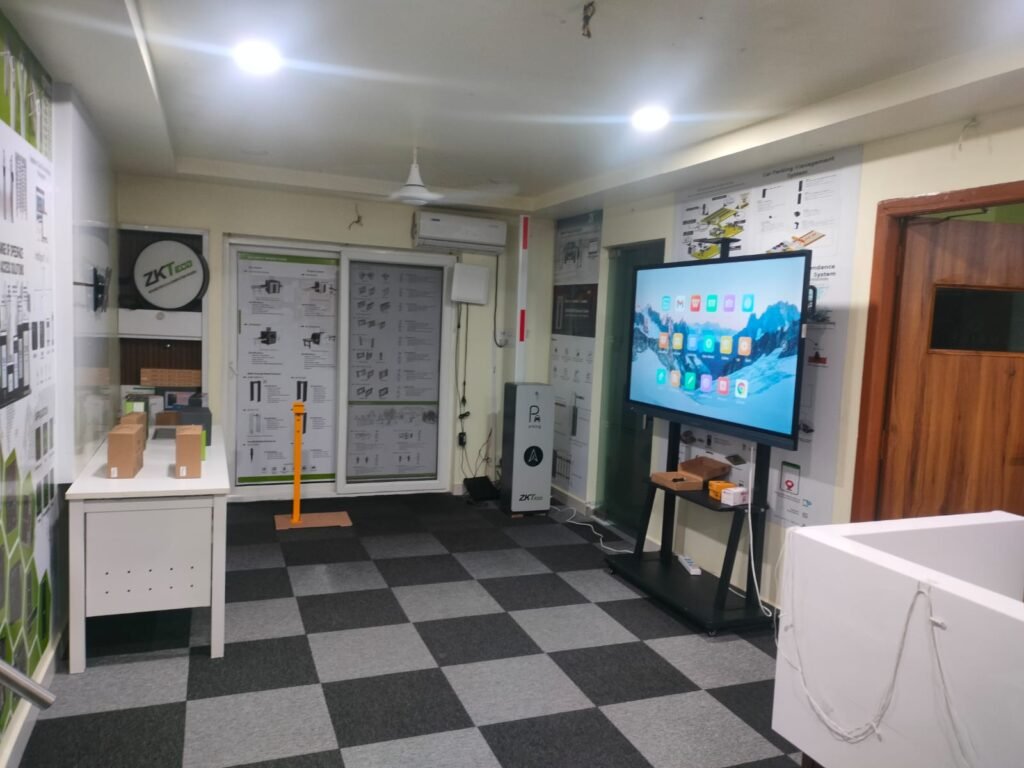
What Is an Interactive Flat Panel?
An interactive flat panel is a large touchscreen display that replaces the traditional blackboard, projector, and screen combination with a single smart device. Teachers can write, draw, play videos, run presentations, and let students interact directly with the screen — all without external computers, except the panel’s own one. Most modern panels run on Android, support multi-touch (so several students can write on the screen at once), and connect wirelessly to teacher laptops and tablets.
For a school, the panel becomes the centre of the classroom — used for daily lessons, diagrams, quizzes, video content, and even parent-teacher presentations.
Interactive Flat Panel Price in India — School Budget Breakdown
Pricing depends mainly on screen size, resolution, and software certification. Here is what schools across India are typically paying in 2026:
- 55-inch panels: ₹65,000 – ₹95,000 — suitable for small classrooms or computer labs
- 65-inch panels: ₹1,00,000 – ₹1,50,000 — ideal for classrooms with 25–35 students
- 75-inch panels: ₹1,50,000 – ₹2,50,000 — the most popular size for Indian schools, fits 35–50 students comfortably
- 86-inch panels: ₹2,00,000 – ₹4,00,000 — best for larger classrooms or seminar halls with 50+ students
- 98-inch and above: ₹4,00,000 – ₹9,00,000+ — used in auditoriums and large lecture halls
For most schools, the 65-inch to 75-inch range, priced between ₹1,20,000 and ₹2,50,000, hits the sweet spot — enough screen size for visibility from the back row, full 4K resolution, and an Android OS that supports Google Classroom and education apps.
What Actually Drives the Price Up or Down
Two schools buying the “same size” panel can end up paying very different prices. Here’s why:
Resolution. 4K (3840×2160) is now the standard for 2026 — anything lower will look blurry from the back rows of a typical classroom. Avoid panels still selling 1080p as “HD” at a discount; the difference in legibility is significant.
Google EDLA certification. This certification gives the panel official access to the Google Play Store, Google Classroom, and YouTube, along with regular security updates. Budget panels without this certification are cheaper upfront but lock you out of the app ecosystem most schools now depend on.
Touch points and responsiveness. Look for at least 20-point touch — this lets multiple students write or interact with the panel simultaneously, which matters for group activities and collaborative lessons.
Built-in vs external OPS PC. Some panels include a built-in Android computer; others require a separate Windows OPS module, which adds ₹15,000–₹30,000 to the total cost but offers more software flexibility for senior classes running specialized software.
Warranty and AMC. A panel with a 3-year onsite warranty and an annual maintenance contract will almost always cost more upfront — but for a device that runs 6–8 hours a day, 200+ days a year, reliable after-sales support saves far more money over its lifetime than the cheaper alternative.
Installation: What to Expect
A proper interactive flat panel installation is not just “mount and plug in.” Here’s what a complete installation should include:
Site assessment. Before installation day, the room should be checked for wall strength, classroom lighting (to avoid screen glare), available power points, and the best mounting height for the average student’s line of sight.
Mounting. Panels are installed using either a fixed wall mount (most common and cost-effective for schools), an electric height-adjustable lift mount (useful in classrooms shared by younger and older students), or a mobile stand with wheels (ideal for shared spaces like staff rooms or seminar halls that need flexibility).
Cabling and power. Proper concealed cabling for power and any wired peripherals keeps the classroom tidy and avoids accidental disconnections during lessons. Surge protection is also recommended, especially in areas with inconsistent power supply.
Software setup and account configuration. This includes Google Workspace or Google Classroom integration, pre-loading any school-specific apps, and configuring screen-sharing so teachers can mirror laptops or tablets wirelessly.
Teacher training. This step gets skipped far too often — and it’s the single biggest reason expensive panels end up unused and gathering dust within six months. A short, hands-on training session for teaching staff makes the difference between a panel that transforms lessons and one that becomes an expensive wall decoration.
Installation typically adds 10–15% to the total project cost when done professionally, including mounting hardware, cabling, and a basic training session — and it is not a cost worth cutting.
How Many Panels Does Your School Actually Need?
Rather than buying one premium panel for a showcase classroom, most schools get better value rolling out a larger number of mid-range, well-supported panels across multiple classrooms. A 75-inch panel with solid after-sales service in every classroom does more for daily learning outcomes than one flagship 98-inch panel in a single demo room.
Volume orders — 10 or more panels for a full campus rollout — typically come with meaningful per-unit discounts, along with bundled installation and an extended AMC, which makes campus-wide deployment more cost-effective per classroom than buying one at a time.
A Word on Total Cost of Ownership
It’s tempting to compare panels purely on the upfront sticker price. But a ₹90,000 panel with no local warranty support, limited touch accuracy, and no spare parts availability will almost always cost a school more over three years than a ₹1,40,000 panel from a dealer with local AMC and onsite service. Factor in:
- Cost of the panel itself
- Mounting hardware and installation labour
- Teacher training time
- Annual maintenance and service response time
- Spare part availability if something needs replacing
For schools in Vijayawada and across Andhra Pradesh, local AMC support matters more than almost any spec on the panel — a fast on-site response when a panel goes down mid-term keeps lessons running and protects your investment.
Final Thoughts
Interactive flat panels have moved from “nice to have” to a near-standard requirement for modern Indian classrooms. The right choice isn’t the cheapest panel or the most expensive one — it’s the size, resolution, and service package that matches your classroom size, your budget, and your school’s long-term usage plans.
If you’re evaluating interactive flat panels for your school in Vijayawada or anywhere in Andhra Pradesh, Raise Solutions can walk you through sizing, brand comparisons, and a complete installation plan — including teacher training and ongoing AMC support — so your investment actually gets used, every single day, for years.